Single-Level Task Nesting
Structure
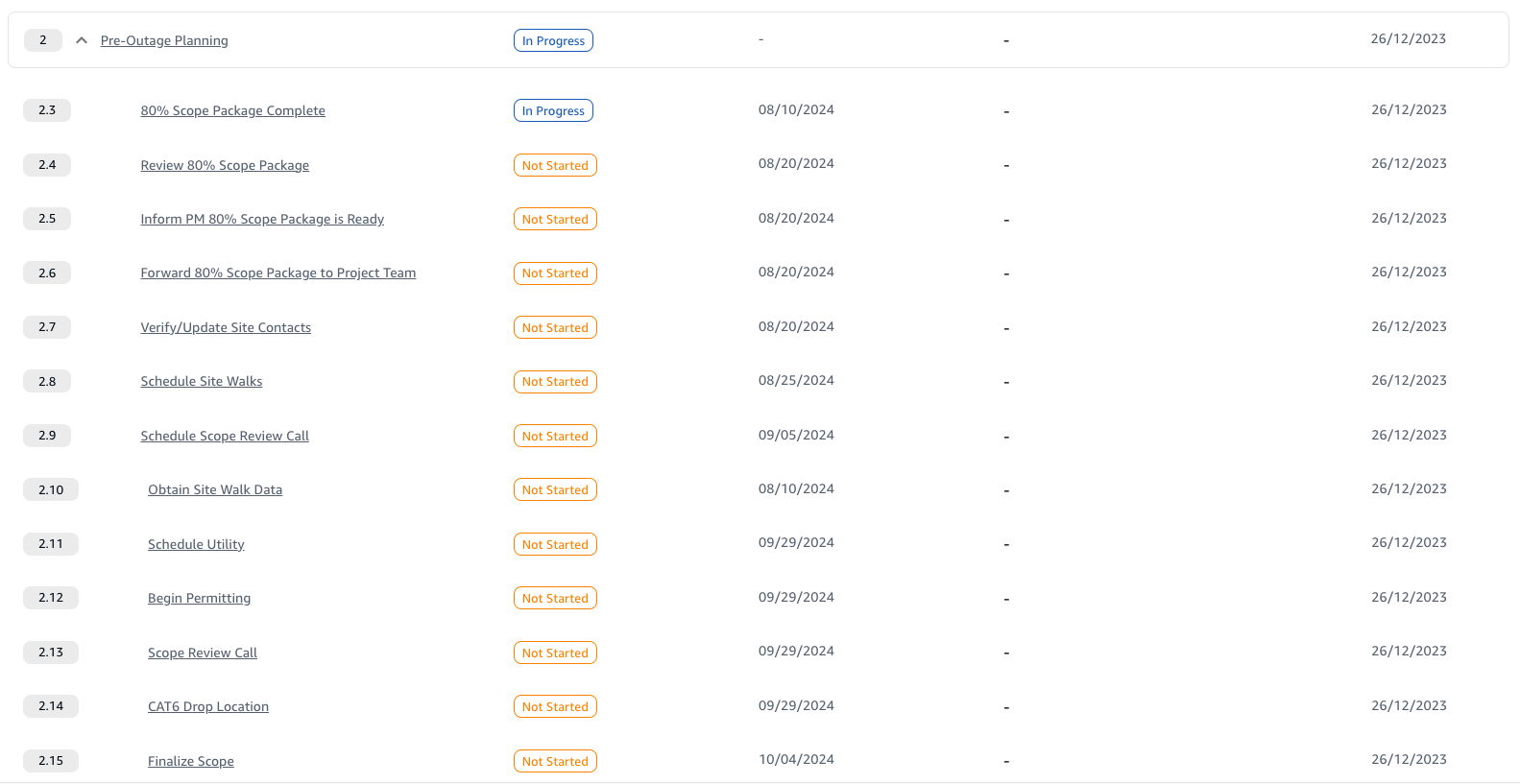
- Each task is given a primary number (e.g.,
1.0,2.0,3.0, etc.), which represents a main task or a significant milestone within the project. - Subtasks related to a main task are nested directly beneath it, indicated by a decimal number (e.g.,
1.1,1.2,2.1, etc.). This denotes that the subtask1.1is a part of the main task1.0.
Rationale for Single-Level Nesting
- Simplicity: By limiting the nesting to a single level, we keep the task structure straightforward, allowing team members to quickly understand task relationships without navigating through multiple layers.
- Ease of Use: A single layer of subtasks reduces the potential for confusion, making it easier for users to locate and manage tasks within the dashboard.
- Reduced Complexity: This approach prevents the creation of overly complex task hierarchies, which can become difficult to track and maintain.
- Focused Collaboration: Team members can concentrate on the tasks at hand without the overhead of deciphering a multi-tiered task structure, promoting clearer communication and collaboration.
Working with Single-Level Nested Tasks
- Viewing Tasks: In the task list, main tasks will appear as standalone items. Any subtasks will be listed directly beneath their corresponding main tasks, slightly indented for visual hierarchy.
- Adding Subtasks: When adding a new task, you can specify if it is a main task or a subtask related to an existing main task. Subtasks inherit certain attributes from their main tasks, providing context and alignment with project goals.
- Task Status: Both main tasks and subtasks have their own status indicators. Updating the status of a subtask does not automatically change the status of the main task, allowing for precise control over each task's progression.
By maintaining a single-level nested task structure, our Project Dashboard facilitates an intuitive and effective task management experience. Users can focus on delivering quality work with the assurance that the task organization is supportive, not burdensome.